
Greek Salad Recipe with Lettuce

This post may include affiliate links. Thank you for your support.
Add as Google Trusted SourceThis Greek salad is crisp, fresh and loaded with romaine, cherry tomatoes, cucumber, kalamata olives and feta all tossed in a homemade Greek dressing. Ready in just 15 minutes and the perfect side dish for summer.
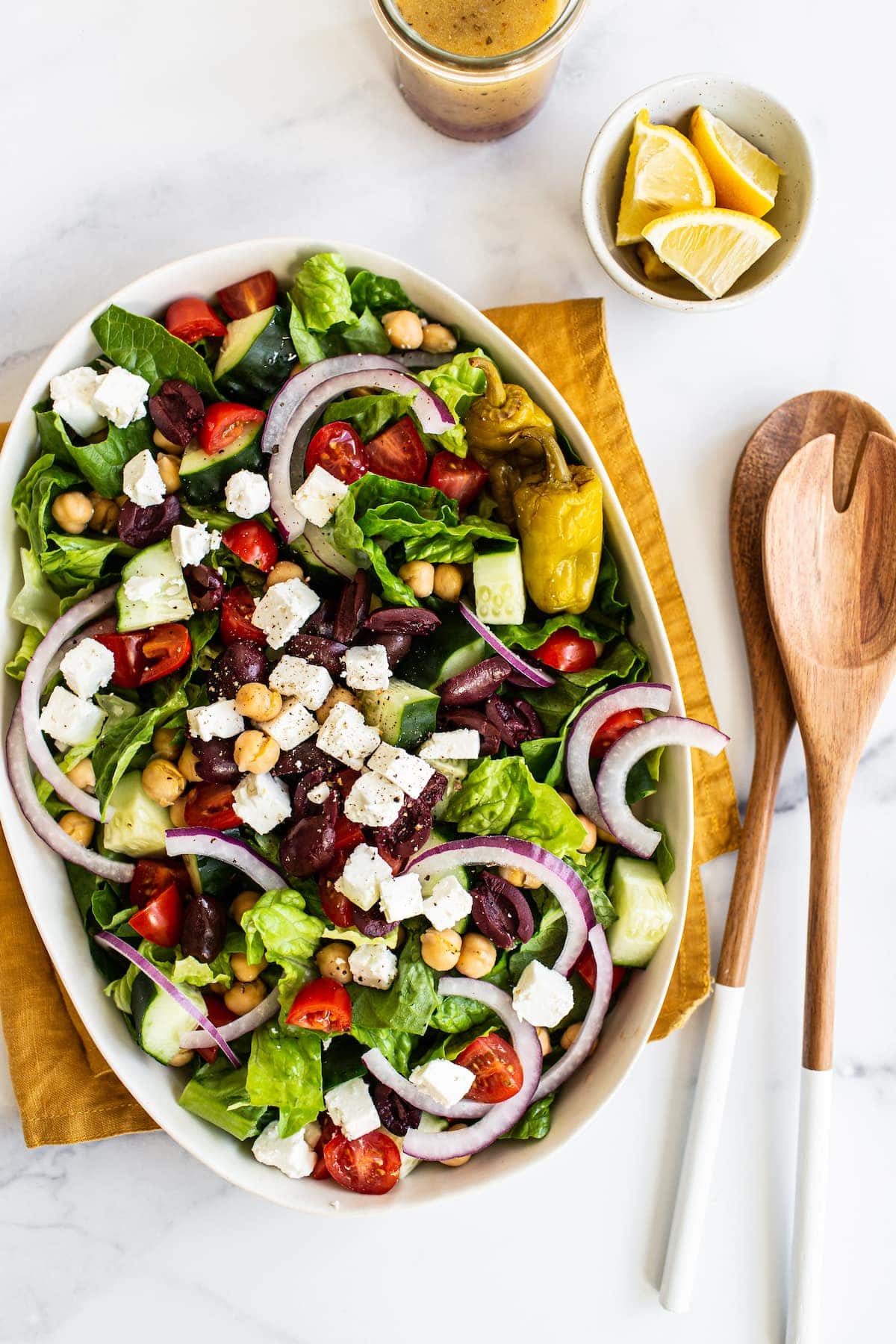
Greek salad has been my go-to order at restaurants for as long as I can remember, so when I finally set out to make my own version at home, I knew I wanted to get it just right. I played around with the recipe quite a bit before landing on this one, and the two things that really make it are the romaine and the dressing. Traditional Greek salads don’t include lettuce, but I love the extra crunch and volume that crisp romaine adds, so I built my version around it.
The dressing was the part I obsessed over most, because as with any salad, the dressing really does make or break the whole thing. My final go-to combines red wine vinegar with fresh lemon juice and a teaspoon of dijon mustard for a bright, tangy, slightly creamy vinaigrette that clings to every bite. Toss it all together with juicy cherry tomatoes, crunchy cucumber, red onion, briny kalamata olives and salty feta, and you’ve got the most refreshing, flavor-packed salad in 15 minutes flat.
Table of Contents
- What You’ll Love About this Recipe for Greek Salad
- Best Greek Salad Recipe Ingredients
- How to Make the Best Greek Salad
- Best Greek Salad Recipe Variations
- Greek Cucumber Salad Storage Tips
- How to Serve Greek Tomato Cucumber Salad
- Brittany’s Tips
- How to Store
- Greek Tomato Cucumber Salad FAQs
- More Greek Inspired Recipes to Try
- Greek Cucumber Salad Recipe
What You’ll Love About this Recipe for Greek Salad

- No cooking required: Just chop, toss and drizzle. It is one of the most effortless salads you can make and it looks and tastes like you put in way more effort than you actually did.
- Kalamata olives are non-negotiable: That briny salty bite is what gives this salad its authentic Greek flavor. Do not swap them out for regular olives.
- It gets better as it sits: Let it rest for a few minutes after dressing and the flavors meld together beautifully. Even better the next day straight from the fridge.
- Pairs with everything: This salad goes alongside my easy tzatziki and warm pita for a full Greek spread that feels like something from your favorite Mediterranean restaurant.
“Made this last night for dinner. We really enjoyed it! Being of Greek decent, I am always looking for a really good Greek salad dressing, and I will definitely make this again.”
Best Greek Salad Recipe Ingredients
If you’ve ever ordered a Greek salad, you know how good it tastes. It’s so fresh tasting and the combo of flavors from all the fresh ingredients is hard to beat.
- romaine lettuce – the base of this salad. Traditional Greek salad does not include lettuce but romaine adds a wonderful crunch and volume that makes this so much more satisfying as a side or meal.
- red onion – adds a sharp bite and beautiful color.
- grape or cherry tomatoes – sweet juicy and the perfect size. Halve them right before serving so they stay fresh.
- English cucumber – adds a cool refreshing crunch that pairs beautifully with the briny olives and tangy feta. English cucumber is my preference since the skin is thin and the seeds are small.
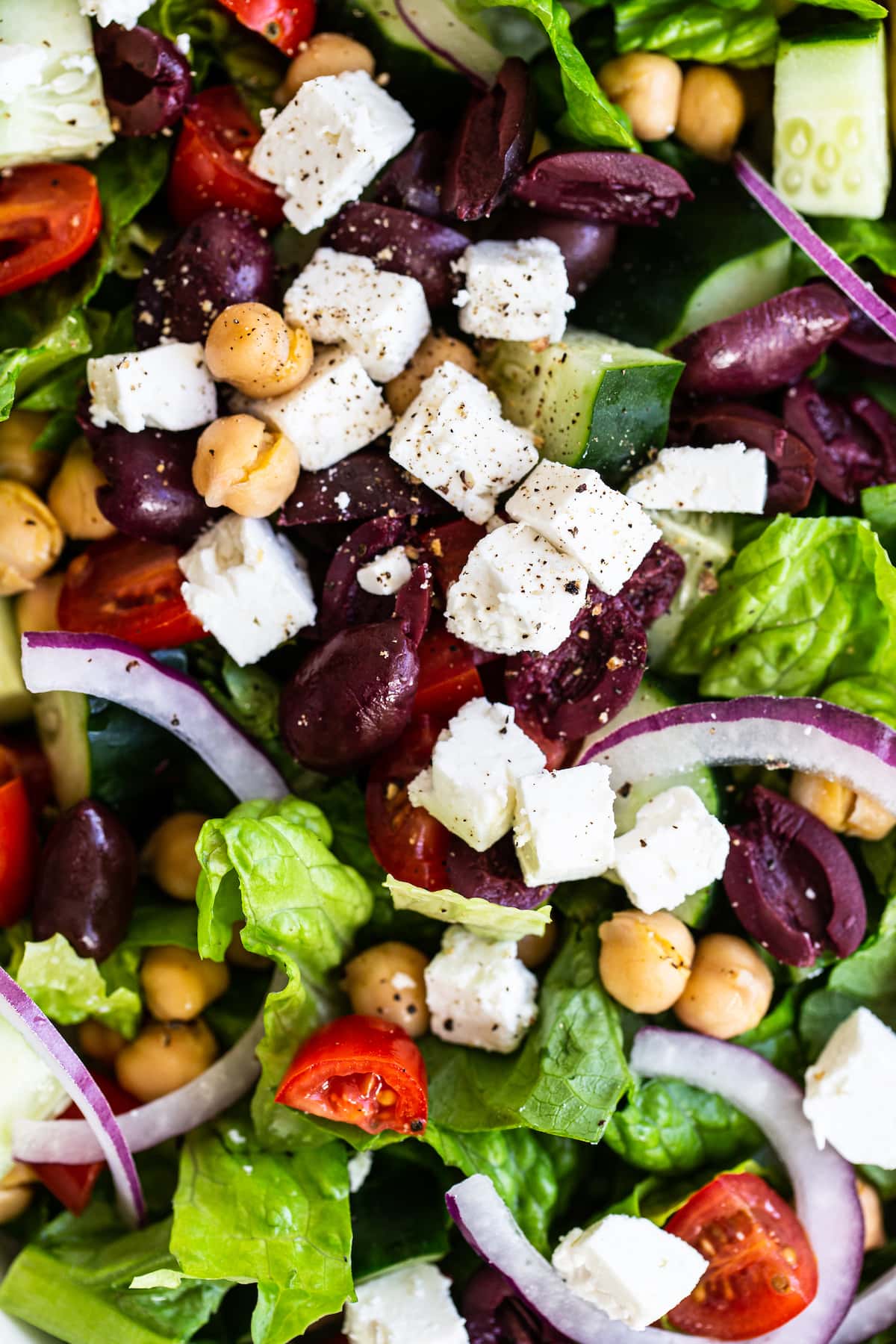
- feta cheese – the creamy salty element that ties everything together. Fresh feta cubes have the best texture but crumbled works great too.
- kalamata olives – classic in any Greek salad and absolutely essential. Their briny salty flavor adds so much depth. Make sure they are pitted before adding them to the bowl.
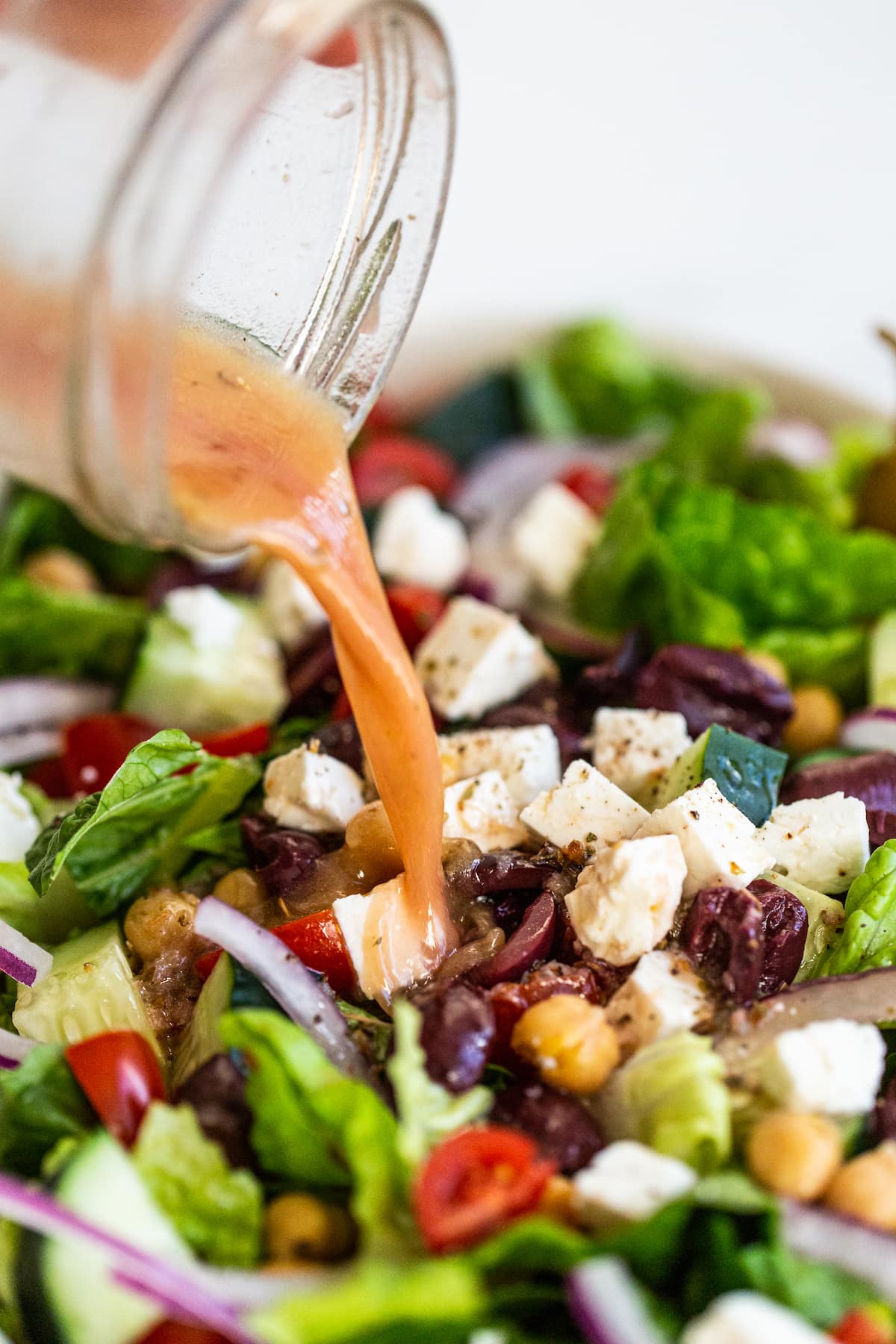
- dressing – the ingredient that makes or breaks this salad. My homemade Greek salad dressing is tangy herby and ready in two minutes. Highly recommend making it from scratch.
How to Make the Best Greek Salad
Step 1: Make the salad dressing by blending all the dressing ingredients together except the olive oil then slowly streaming it in while blending on low. Set aside.
Step 2: Rinse, chop and dry the romaine lettuce and transfer to a large salad bowl.
Step 3: Add the red onion, tomatoes, cucumber, olives and feta to the bowl and toss to combine.
Step 4: Drizzle half the dressing over the salad and toss. Taste and add more dressing as needed. Serve immediately.
Best Greek Salad Recipe Variations
- Add a protein: Toss in some shredded grilled chicken, crispy roasted chickpeas or grilled shrimp to turn this into a hearty main dish.
- Make it a Mediterranean spread: Serve alongside warm pita and a big bowl of my creamy hummus for a full mezze-style meal.
- Switch up the veggies: Bell peppers, artichoke hearts and pepperoncini are all classic Greek salad additions worth trying.
- Try a different cheese: Crumbled goat cheese instead of feta gives the salad a creamier, tangier vibe.
- Add fresh herbs: A sprinkle of chopped mint, dill or parsley adds a fresh layer of flavor.
- Use heirloom tomatoes: Swap the cherry tomatoes for sliced heirloom tomatoes when they’re in season.
Greek Cucumber Salad Storage Tips
Greek salad is best enjoyed fresh, but with a few tricks it can hold up beautifully for meal prep or make-ahead entertaining. Here’s how to keep it from getting soggy:
- Prep in advance, dress before serving. You can chop all the veggies and store them in an airtight container in the fridge for up to 2 days. Just wait to toss with the dressing until right before serving to prevent the vegetables from releasing too much water.
- Salt the tomatoes and cucumbers separately. If you’re prepping ahead, lightly salt the sliced tomatoes and cucumbers and let them drain on paper towels for 15 to 20 minutes. Pat dry before combining with the rest of the salad.
- Store leftovers properly. Any leftover salad (already dressed) will keep in an airtight container in the fridge for up to 2 days, but the veggies will soften over time and the salad will get progressively wetter. Give it a good stir and drain any excess liquid before eating.
How to Serve Greek Tomato Cucumber Salad
As you can tell, the base recipe is basically just for greens and veggies. You can serve it as a side or amp it up with a few ingredients to make it a full sized salad!
- As a side dish: This is the classic move. Serve it alongside anything coming off the grill at your next cookout and it will be one of the first things to disappear from the table.
- As a wrap: Stuff it into a warm pita with a drizzle of dressing for a quick and satisfying lunch. My Greek chicken wrap is a great template if you want to take it further.
- As a light lunch: Serve a generous portion on its own with some crusty bread on the side to soak up all that extra dressing. Simple and so satisfying.
- With added protein: Top it with your favorite protein to turn this into a complete meal. My baked Greek chicken, pesto salmon or Greek turkey meatballs are all incredible options alongside this salad.
Brittany’s Tips
- Dry your lettuce well: This is one of those small details that makes a big difference. Wet romaine dilutes the dressing and leaves you with a watery salad that nobody wants. I always use my salad spinner and I genuinely think it is one of the most underrated kitchen tools out there. Pat dry with a clean kitchen towel if you do not have one.
- Add the dressing right before serving: I learned this the hard way. Greek salad dressed too far in advance turns soggy and sad. If you are bringing this to a cookout or making it ahead keep the dressing in a jar on the side and toss right before serving. The salad stays crisp and everyone is happy.
- Use block feta not pre-crumbled: I know the bag of pre-crumbled feta is convenient but it is genuinely not the same. Block feta packed in brine is creamier, saltier and so much more flavorful. Take the extra 30 seconds to crumble it yourself and you will taste the difference immediately.
How to Store
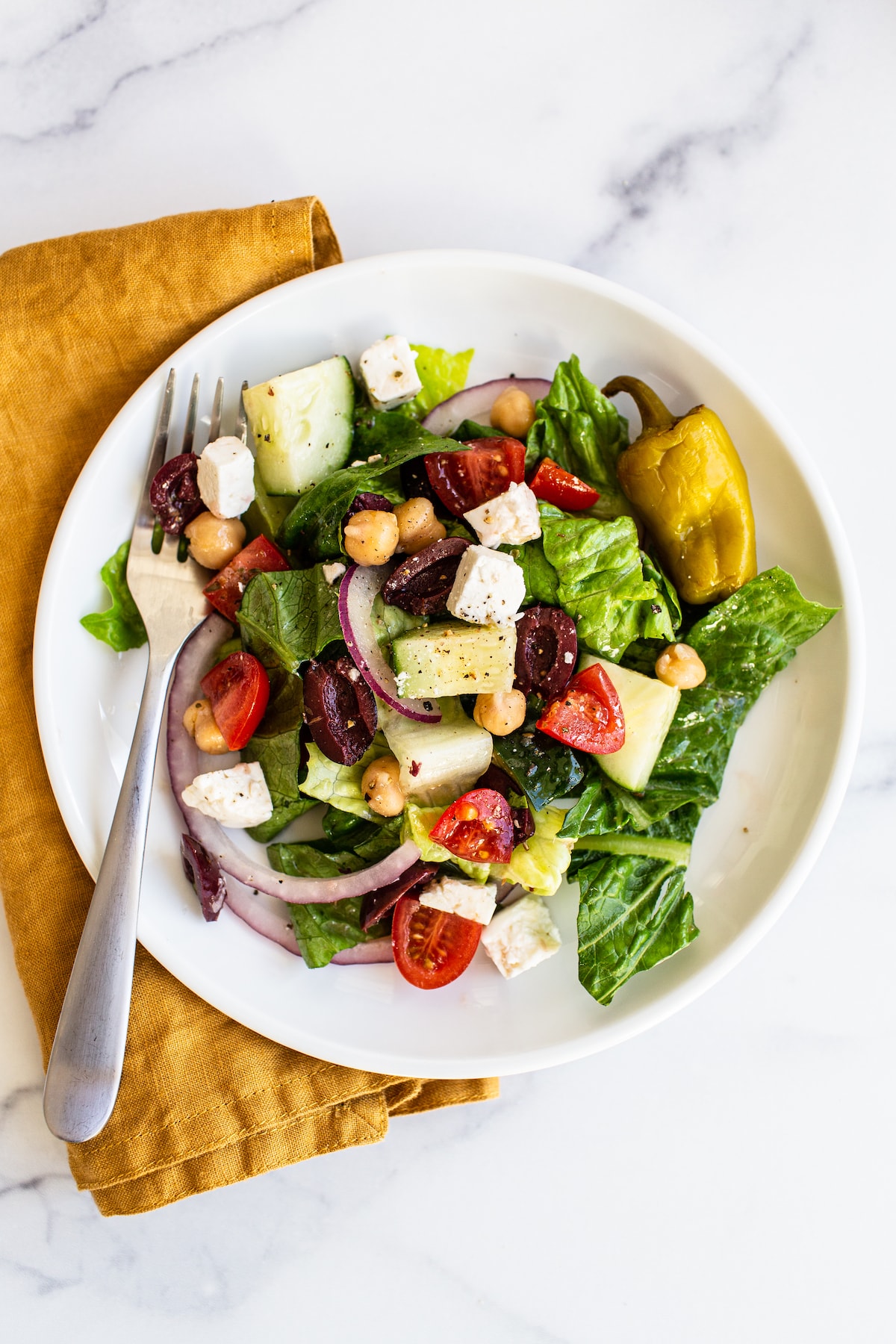
Greek salad is best enjoyed fresh, but leftovers will keep in an airtight container in the refrigerator for up to 2–3 days.
The vegetables will release some liquid as they sit, so give the salad a good toss before serving. If you’re making this ahead of time, I recommend storing the dressing separately and adding the feta just before serving for the freshest texture.
Greek Tomato Cucumber Salad FAQs
Yes! If I’m making it for a party or meal prep, I’ll chop all the veggies ahead of time and store them in the fridge. Just wait to add the dressing and feta until you’re ready to serve for the best texture.
A traditional Greek salad is made with tomatoes, cucumber, red onion, olives and feta cheese, dressed with olive oil and oregano. It typically doesn’t include lettuce.
Absolutely. You can simply leave out the feta or use your favorite dairy-free feta alternative.
Horiatiki is the traditional Greek “village salad” and the original version of Greek salad. It’s made with tomatoes, cucumber, red onion, olives and a block of feta on top, without lettuce.
I prefer English cucumbers (sometimes labeled hothouse cucumbers) for Greek salad. They have thinner skin, fewer seeds and less water than regular slicing cucumbers, so they stay crunchy longer once mixed with the dressing. Persian cucumbers are another great option. If all you have is a regular cucumber, just peel and seed it first to avoid extra water and any bitterness.
Yes, just chop them into bite-sized chunks. Cherry and grape tomatoes are my go-to because they hold their shape and don’t release as much water, but a really ripe heirloom or roma works beautifully too. Tomato season at the farmers market is the best time to play around with this.
Feta is golden standard for Greek salad, but crumbled goat cheese is a great swap if you want something creamier than feta. If you’re looking for something dairy-free, pepperoncini peppers, artichoke hearts, bell pepper or chickpeas all add nice variety, and fresh herbs like mint, dill or parsley add a bright finish.
A few tricks help here: use English cucumbers (they have less water than regular cucumbers), don’t dress the salad until you’re ready to serve and toss everything just before eating. If you want to take it a step further, lightly salt the cucumber and tomatoes and let them drain on a paper towel for 10 minutes before adding them to the bowl. That extra step really helps the salad stay crisp.
This salad is really best the day it’s made, but if you have leftovers, store them in an airtight container in the fridge for up to a day. The veggies will lose some of their crunch and the romaine will wilt, but the flavor will still be there. For meal prep, I’d recommend storing the dressing separately and tossing it in right before eating.
More Greek Inspired Recipes to Try


If you enjoyed this recipe, please consider leaving a ⭐ star rating and let me know how it went in the 📝 comments below.

Greek Cucumber Salad
Ingredients
- 1 head of romaine lettuce, chopped
- ½ cup red onion, halved and sliced
- 1 cup grape or cherry tomatoes, halved
- ½ English cucumber, thinly sliced and halved
- ¼ cup pitted kalamata olives, halved
- ½ cup chopped cubes of fresh feta or crumbled feta
- Optional additions: avocado, chopped bell pepper, pepperoncini peppers, chickpeas or grilled chicken
Greek Salad Dressing
- 2 small garlic cloves, minced
- 1 teaspoon dijon mustard
- 1 teaspoon dried oregano
- 2 Tablespoons red wine vinegar
- juice of 1 lemon, about 2-3 Tablespoons
- ½ teaspoon salt
- ½ teaspoon black pepper
- ¼ cup olive oil
Instructions
- Add garlic, dijon mustard, oregano, red wine vinegar, lemon juice, salt and pepper to a blender. Blend until combined. With the blender running on low, slowly drizzle in the olive oil until the dressing is smooth and emulsified. Set aside.2 small garlic cloves, 1 teaspoon dijon mustard, 1 teaspoon dried oregano, 2 Tablespoons red wine vinegar, juice of 1 lemon, ½ teaspoon salt, ½ teaspoon black pepper, ¼ cup olive oil
- Rinse, chop and dry romaine lettuce. I like using my salad spinner to dry it. Transfer chopped lettuce to a large salad bowl.1 head of romaine lettuce
- Add red onion, tomatoes, cucumber, olives and feta cheese. Add additional topping options, if desired.½ cup red onion, 1 cup grape or cherry tomatoes, ½ English cucumber, ¼ cup pitted kalamata olives, ½ cup chopped cubes of fresh feta or crumbled feta
- Drizzle half of the dressing over the salad, toss and taste. Add more dressing, if needed.
Notes
- Storage: Store leftovers in an airtight container in the fridge for up to 2–3 days. The veggies will release some liquid as they sit, so give everything a good toss before serving.
- Make-ahead tip: If you’re prepping this in advance, keep the dressing separate and add it just before serving for the best texture.
Nutrition
Nutrition information is automatically calculated, so should only be used as an approximation.

Like This Recipe? Rate & Comment Below!









Just made the dressing and it is delicious. Do you know the nutritional information for just the dressing?
Hi Ann2! I am so glad you are enjoying the dressing. Yes, you can find the nutritional info here.
yummy
I’m so glad you enjoyed this Greek Salad, Michelle! Thanks for the review 🙂
A perfect Greek salad and home made dressing. Our grocery store was out of romaine so i had to improvise with spinach and it was still fantastic. I will also try the dressing as a Greek marinade for chicken to add atop the salad or make gyros with!
So glad you enjoyed this salad, Ashlee!! Thanks for making it and for coming back to leave a review. I so appreciate it!
Best greek salad dressing I’ve ever had. Definitely will be my go to salad!
Ahh yay!! So glad you loved this dressing. Thanks for the review. I so appreciate it!
Made this last night for dinner. We really enjoyed it! Being of Greek decent, I am always looking for a really good Greek salad dressing, and I will definitely make this again.
Woo!! So glad this salad was a hit. Thanks for coming back to leave a review, Nicole. I so appreciate it!