
Bubbie’s Charoset

This post may include affiliate links. Thank you for your support.
Add as Google Trusted SourceA Sephardic charoset recipe made with raisins, dates, dried figs and walnuts. This tasty spread is delicious on matzoh for Passover and a must-have on your seder plate.
My husband, Isaac, is Jewish and over the years of being together I’ve had a lot of fun learning about Jewish traditions, participating in Jewish holidays and enjoying lots of amazing Jewish food! With Passover right around the corner, I thought it would be appropriate to share a traditional Passover dish that my mother-in-law (aka Bubbie) makes every year, charoset.
What is Charoset?
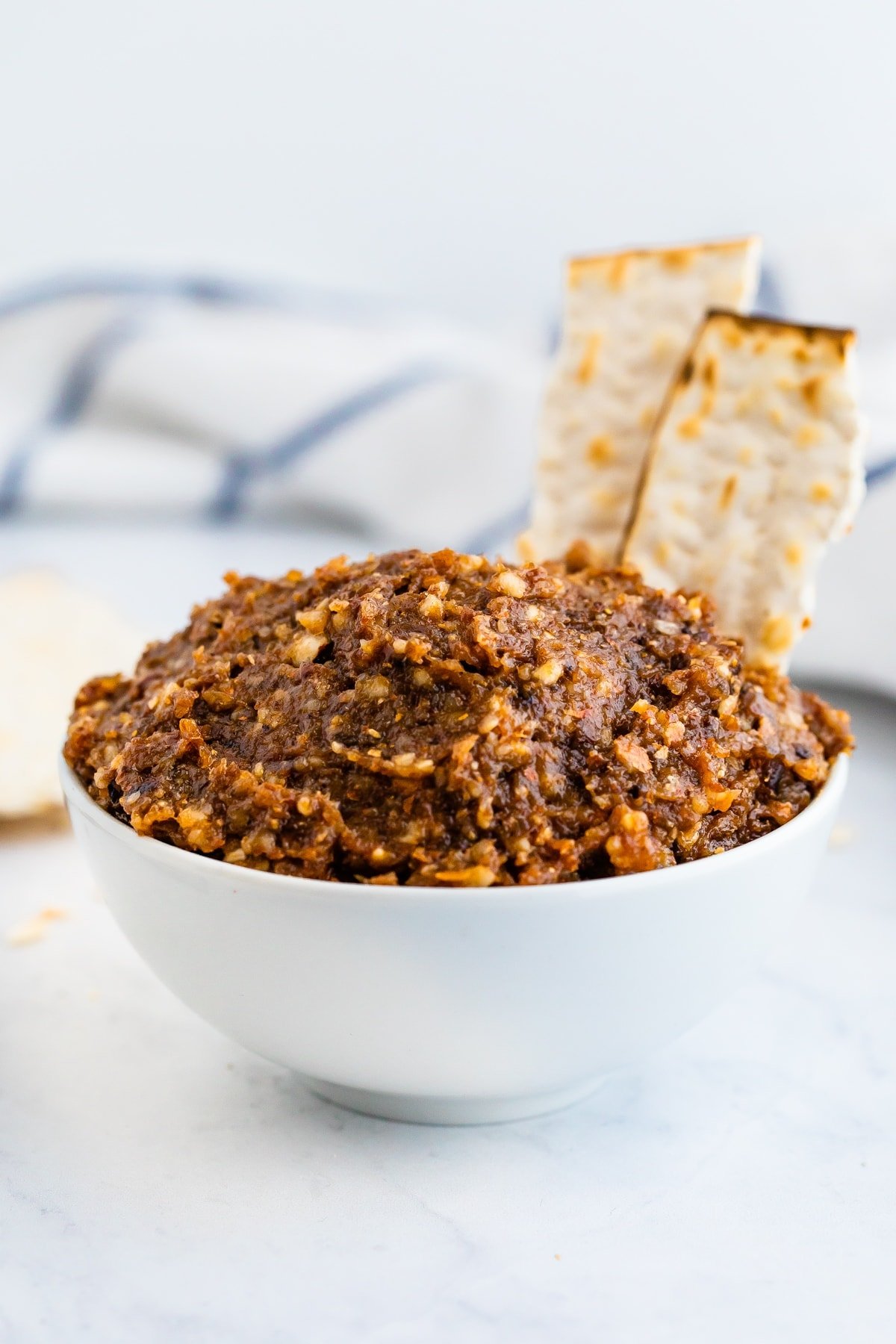
Charoset is a sweet, brown, pebbly paste of fruits and nuts, representing the mortar used between bricks by the Jewish slaves to build cities in Egypt.
The mixture varies depending on region. For instance, an ashkenazi charoset recipe from Eastern Europe would typically include nuts, chopped sweet apples (usually galas or fujis), cinnamon and sweet wine whereas the Sephardic recipe is thicker and contains ingredients native to the Middle East such as raisins, figs and dates.
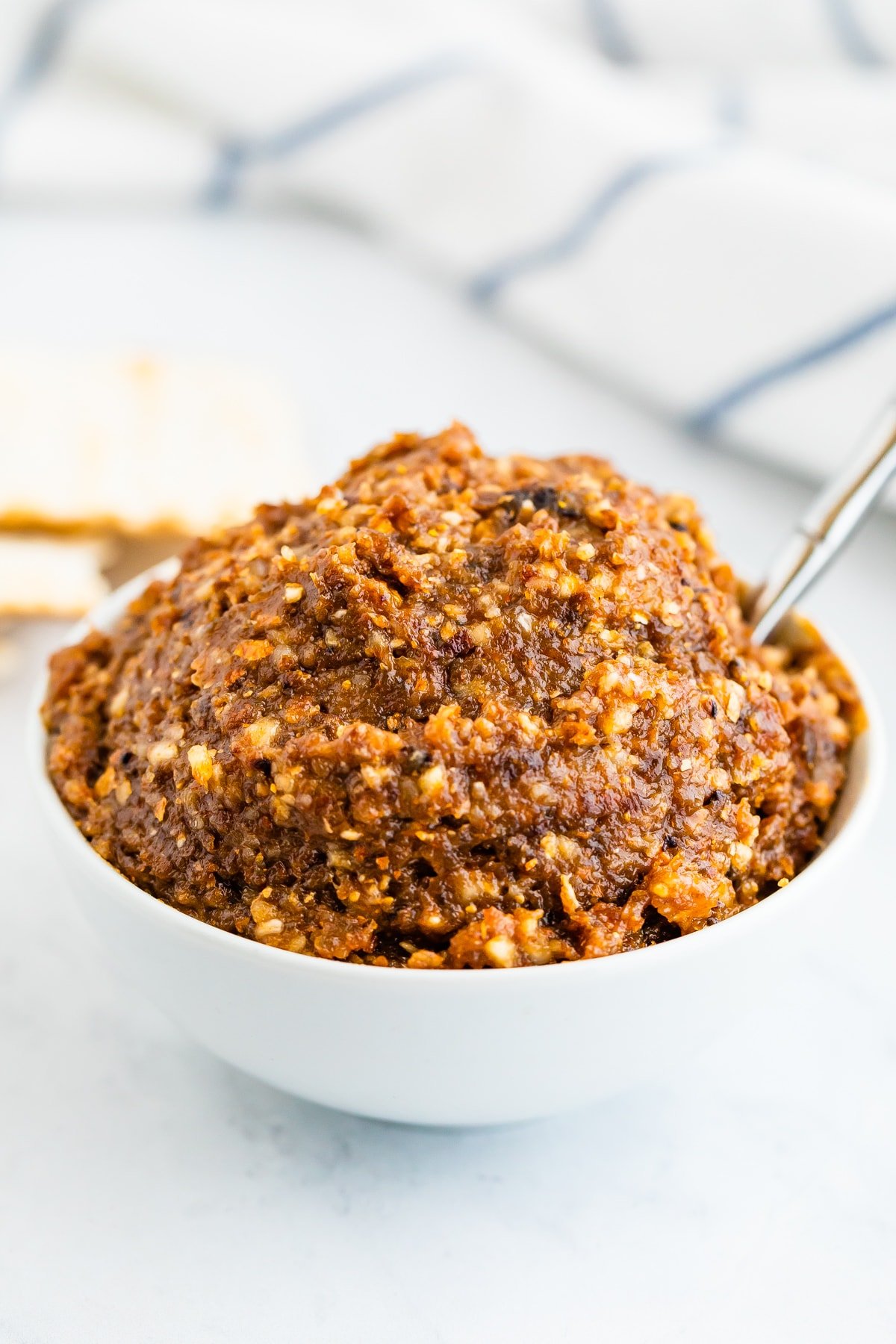
I’ve had several different versions of charoset and have liked them all, however being a dried fruit lover, I absolutely love the texture and taste of the Sephardic version.
Luckily Bubbie was willing to share her recipe so I could make it myself (and share it with you)!
Ingredients for Sephardic Charoset
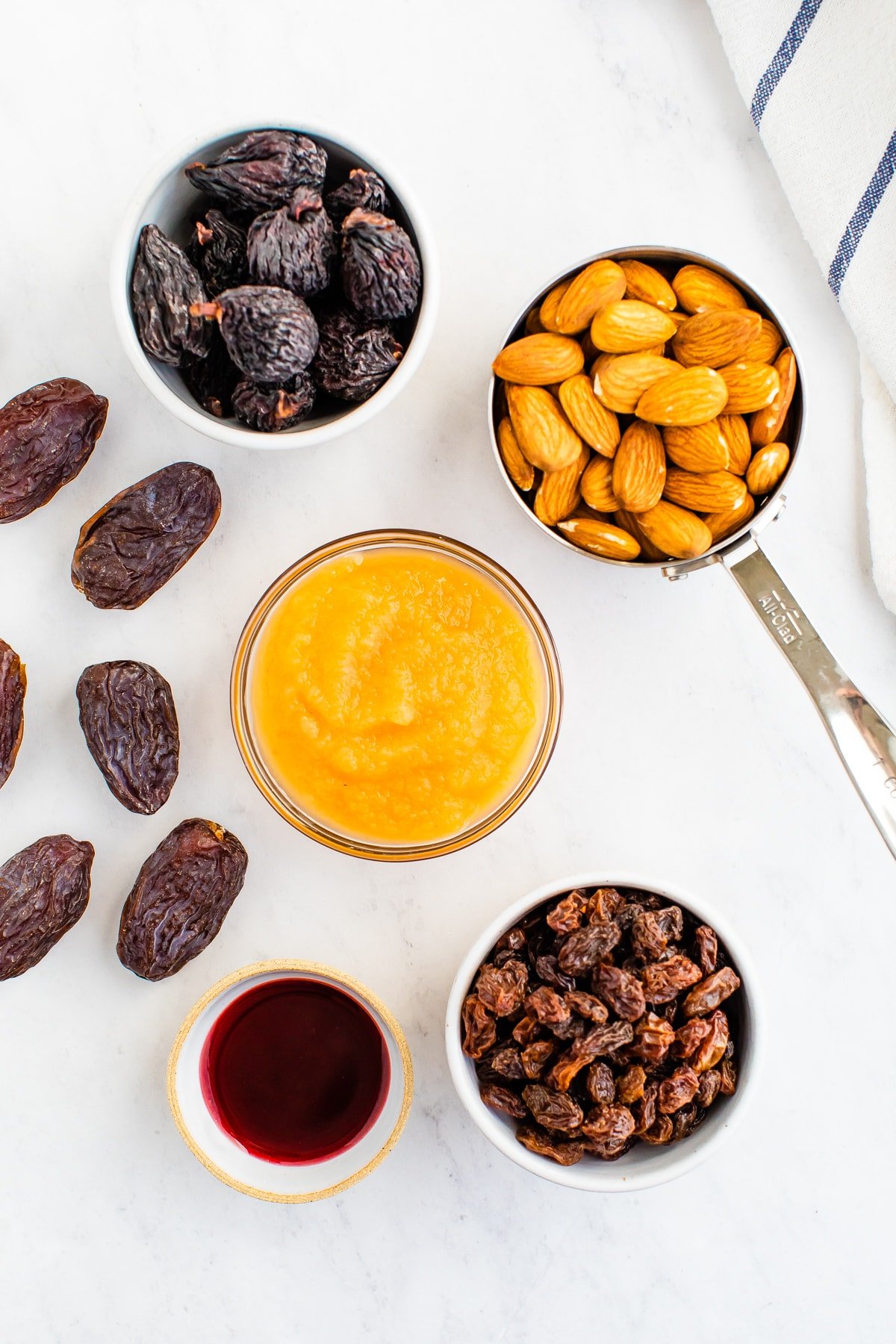
The ingredient list for charoset is pretty minimal! Here’s what you’ll need:
- dried fruit – a combination of raisins, medjool dates, dried figs. If your dates seem dry, you can soak them in water for 5-10 minutes to rehydrate before using.
- walnuts – this is what I typically use, but you can also use pecans
- applesauce – look for unsweetened applesauce if you’re using store-bought our make your own using my easy applesauce recipe
- sweet red wine or fruit juice – Manischewitz wine is what the recipe calls for, but I have used pomegranate juice, cherry juice and grape juice. They all work great.
How to Make Charoset
For this charoset, you’ll need a food processor or blender because the mixture is blended into a paste rather than just chopped. Here’s how to make it:
- Process nuts and dried fruit: Add nuts, raisins, dates, figs and applesauce into the food processor and process until combined, gently adding wine/juice as you grind to help keep it moving.
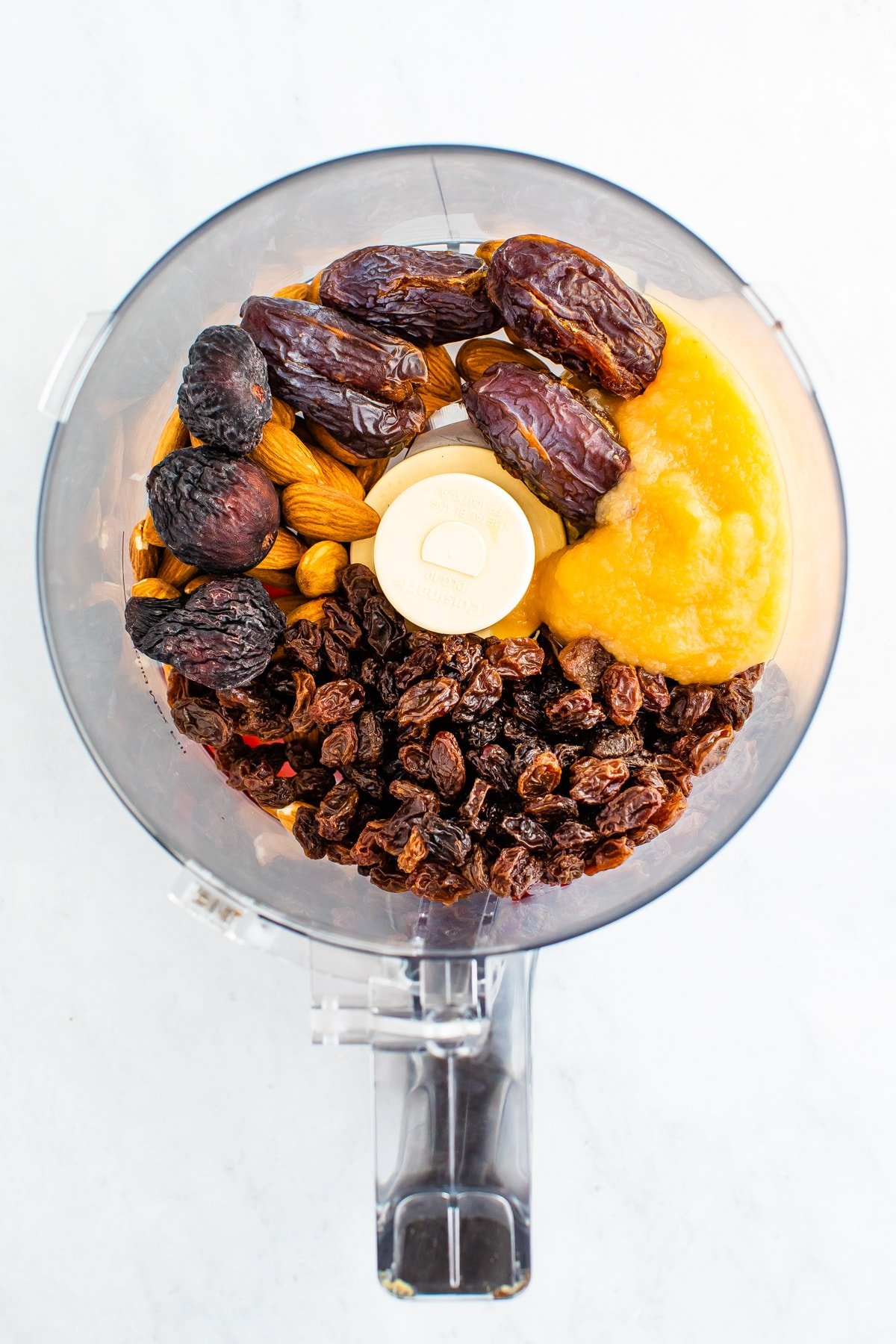
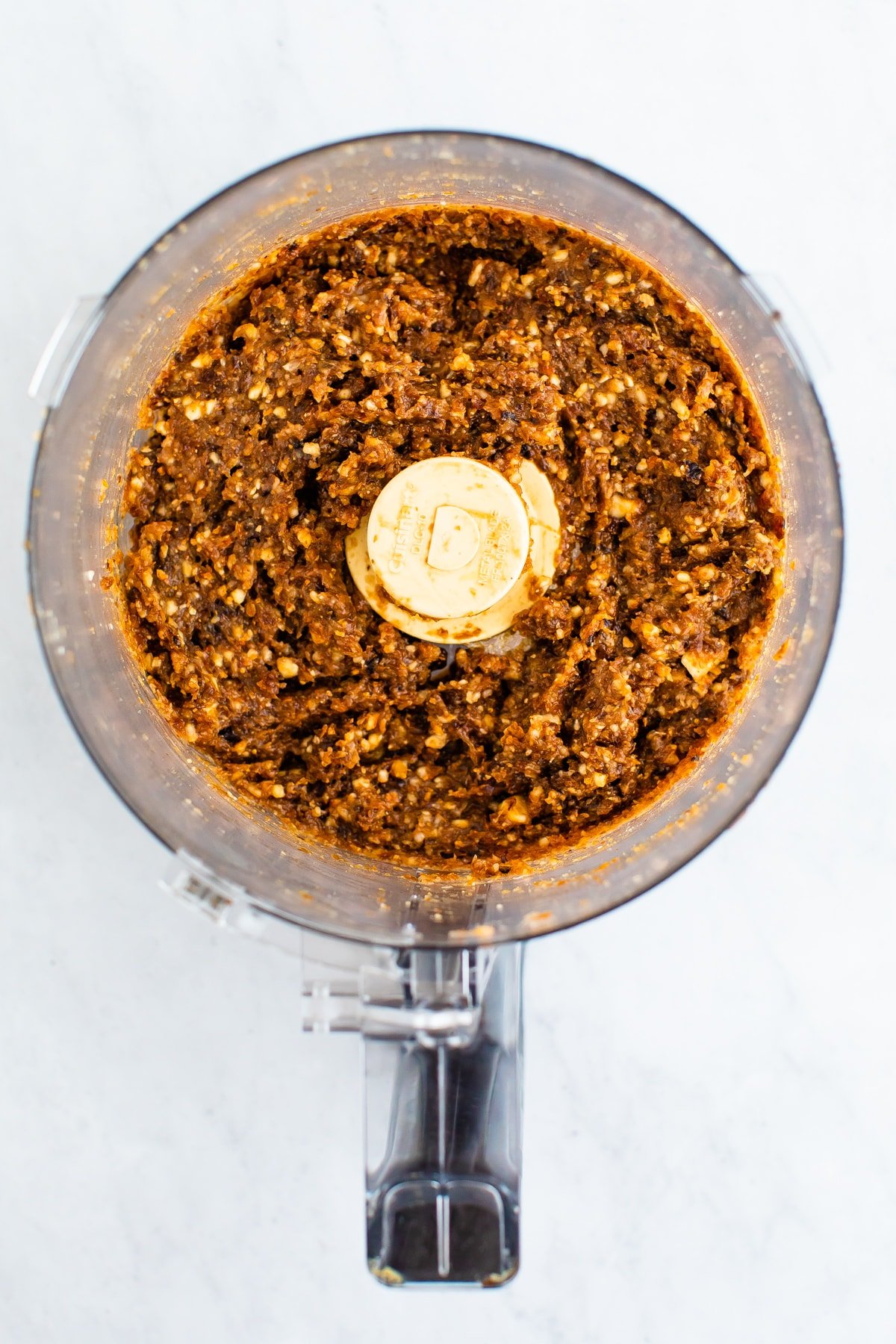
Pulse: Pulse until the mixture looks like a coarse paste. Remove the charoset from the processor and place it into a bowl or container.
Enjoy: Serve as a spread for matzoh.
How to Serve Charoset
Charoset is traditionally served at the Passover Seder and used as a spread on matzoh, but that doesn’t mean you have to be Jewish to enjoy it.
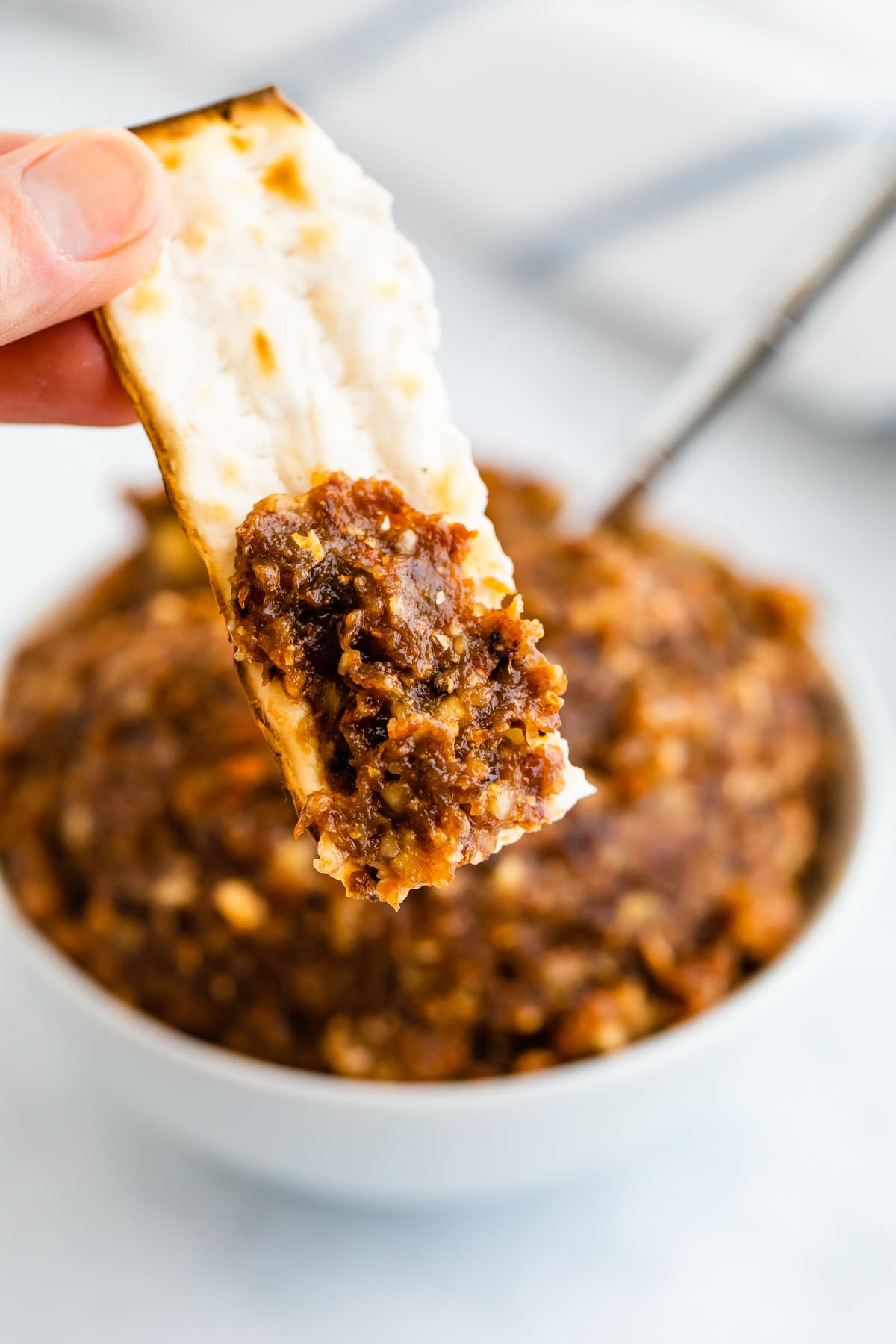
Maybe it’s the fruit and nut lover in me, but I honestly think this spread would be delicious on just about anything.
I already have plans to add the charoset to my oatmeal and yogurt bowls this week. It would also be phenomenal on a cheese plate or charcuterie board. The possibilities are endless.
How to Store Charoset
This recipe can easily be made ahead of time! Refrigerate any leftovers in an airtight container in the fridge for later use. The charoset should last for 5-7 days in the fridge.
This recipe makes about 3.5 cups so if you’re only making it for a small family, you could easily halve the recipe.
More Passover-Friendly Recipes
- Coconut Macaroons
- Chocolate Coconut Macaroons
- Easy Fruit Salad
- Israeli Salad
- Healthy Passover Recipes
If you enjoyed this recipe, please consider leaving a ⭐ star rating and let me know how it went in the 📝 comments below.
Bubbie’s Charoset
Ingredients
- 1 cup raw walnuts or pecans
- 2 cups raisins
- 4 oz medjool dates, (about 7 pitted)
- 4 dried figs
- 1 cup unsweetened applesauce
- 1-2 Tablespoons sweet red wine or fruit juice, I used pomegranate juice
Instructions
- Add nuts, raisins, dates, figs and applesauce into the food processor and process until combined, gently adding wine/juice as you grind to help keep it moving.
- Once the mixture is fully combined and looks like a coarse paste, remove the charoset from the processor and place it into a bowl or container.
- Serve as a spread for matzoh.
- Refrigerate any leftovers in an airtight container in the fridge for later use. It should last at least 5-7 days in the fridge.
Notes
- Dates: If your dates seem dry, you can soak them in water for 5-10 minutes to rehydrate before using.
- Nuts: Walnuts or pecans are traditional, but I’ve also made this with almonds.
- Halving the recipe: This recipe makes about 3.5 cups so if you’re only making it for a small family, you could easily half the recipe.
Nutrition
Nutrition information is automatically calculated, so should only be used as an approximation.

Like This Recipe? Rate & Comment Below!










Mmm – great recipe. I just made it and I agree, I could use this mixture on everything! It’s like a spreadable Larabar.
I think about 90% of my friends in this city are Jewish so it’s great to see a recipe I can actually share with them when they invite me to holiday celebrations! Thanks girl and love your cute new header!
Just bookmarked this recipe!
I always wished I could partake in a traditional Passover dinner 🙂 Isaac and his family are very lucky to have a chef like you be a part of theirs! Can’t wait to see your recap and what other tricks you’ve got up your sleeve.
XO! Hope you’re enjoying this lovely weather my love!
I cannot imagine how you could go wrong with dried fruits and nuts. This looks delicious!
PS. LOVE the header!! It’s perfect 🙂
It almost looks like a thicker, more dense apple butter. Thanks for sharing!
What a wonderful recipe. I was going to do a sedar plate on Holy Thursday. Do you mind if I link back to you?
Awesome Veronica. I don’t mind at all.
Looks like a great spread to try! You’re right, this would be great on a lot of things or in a pb sammy 🙂
I’m not Jewish either, but I am starting to collect recipes so that I can make an authentic meal! This looks perfect and I can’t wait to try it! If you have any more recipes, that would be wonderful!
I love charoset too. Ironically, I never thought it looked pretty. First time my children saw it and ate it, they grimaced in fear until it entered their mouths. After all, mortar isn’t supposed to be pretty, but in this case it is yummy.